

If you’ve ever watched the Crash 150 Index chart and wondered when the next high-probability setup would appear, you’re not alone. These synthetic indices move fast, spike unpredictably, and punish traders who chase fake patterns.
But what if you could identify specific moments—what we call “Great Chance” setups—that appear almost daily across all Crash and Boom markets?
Today is November 16th, 2025, and this article breaks down a real trading opportunity that emerged on the Crash 150 Index early this morning. Whether you’re new to Deriv or already trading these volatile instruments, you’ll gain practical awareness about how to spot genuine momentum shifts before they materialize into profitable moves.
What Happened on November 16th
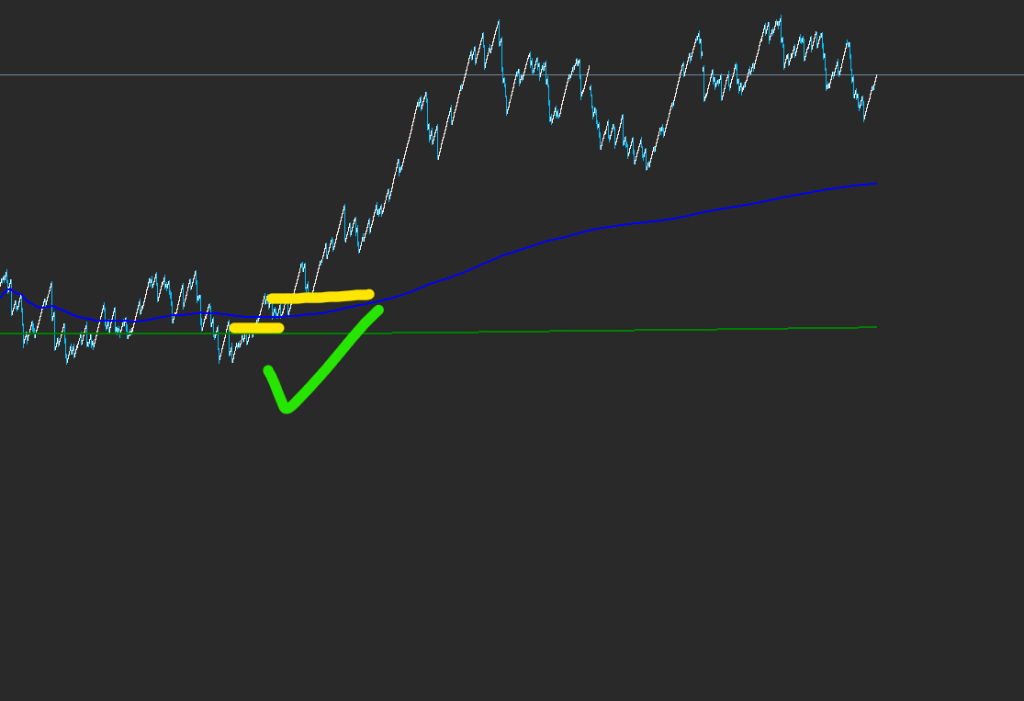
Around 4:00 AM GMT +2 on November 16th, the Crash 150 Index showed a clear strong momentum push on the upside, meaning bullish movement.
Here’s what made this moment significant: while momentum was attempting to move downward, the price kept pushing upward against that downward pressure. This tug-of-war created a high-probability setup for traders watching in real time.
The bullish push emerged suddenly, offering a window of opportunity for those positioned correctly. Personally, I missed this setup, today wasn’t my trading day. But for someone monitoring the charts at that exact moment, the upside movement was there to capture.
This is precisely the type of scenario we identify using our proprietary MT5 indicator, a tool designed specifically to analyze market opportunities without excessive chart observation. This indicator is not for sale; it’s a private tool created to streamline our personal trading process.
The key here isn’t the tool itself, it’s recognizing the pattern when it appears.
Understanding Deriv Crash Index Markets
If you’re new to Crash/Boom indices and Deriv, here’s what you need to know.
Deriv is a trading platform that offers synthetic indices, mathematically generated markets that simulate real-world price movements but aren’t tied to actual assets. The Crash 150 Index is one such synthetic index designed to crash (drop sharply) on average once every 150 ticks.
Unlike forex or stock markets influenced by economic news and geopolitical events, synthetic indices follow algorithmic patterns. They move based on predetermined volatility parameters, making them both predictable and deceptive at the same time.
The “Crash” family includes multiple indices: Crash 300, Crash 500, Crash 1000, each with different spike frequencies. The Crash 150 Index sits at the more volatile end, offering frequent opportunities but requiring sharp timing.
Boom indices work inversely, they spike upward at regular intervals instead of crashing downward. Together, Crash and Boom markets create a unique trading ecosystem where spike detection becomes the primary skill.
These markets operate 24/7, never sleep, and reset patterns constantly. This means opportunities appear around the clock, but so do traps for unprepared traders.
Identifying “Great Chance” Setups
We use a specific term in our trading approach: “Great Chance.”
Great Chance is our keyword to identify high-probability setups that appear almost every day across all Crash and Boom markets. These aren’t guaranteed wins, nothing in trading ever is, but they represent moments where technical confluence aligns in your favor.
Here’s how the strategy works:
First, we monitor momentum divergence. When price attempts to move in one direction but keeps pushing in the opposite direction (like today’s downward pressure met with upward movement), that’s a signal worth investigating.
Second, we watch for compression zones. Before major spikes or trends develop, the Crash 150 Index often consolidates, tightening its range before explosive movement.
Third, we apply our custom MT5 indicator. This tool automates pattern recognition, highlighting potential Great Chance moments without requiring constant manual chart analysis. It filters out noise and focuses on statistically significant setups.
The strategy isn’t about predicting every spike. It’s about waiting patiently for setups that meet our criteria, then executing with precision when they appear.
Risk management remains paramount. Even high-probability setups can fail, which is why we always trade with controlled position sizes and predetermined stop-losses.
Avoiding Fake Patterns
Here’s the harsh reality: crash spikes deriv charts sometimes create misleading patterns.
You might see what appears to be a trend forming, consolidation, breakout signals, volume patterns, but it’s actually a trap. This applies to both spike-side movements (downward crashes) and trend-side movements (upward or sustained directional bias).
Fake trends are the biggest threat. The Crash 150 Index can simulate trend behavior for 10, 20, even 50 ticks before reversing violently. Traders who chase these false signals get stopped out repeatedly.
We always need to keep our eyes open to identify the correct spot and avoid falling for fake trends. This requires discipline, resisting the urge to enter every setup that “looks good” on the surface.
The complication compounds for beginners. Without experience reading these synthetic markets, distinguishing genuine Great Chance setups from noise becomes nearly impossible. Even experienced traders get fooled occasionally.
That’s why systematic analysis matters more than gut feeling. Tools, indicators, and defined criteria help separate signal from noise, but they’re not foolproof.
Real Trading Opportunities
So what does a missed opportunity like November 16th actually mean in practical terms?
For traders who caught the 4:00 AM GMT +2 upside movement, the potential profit depended on entry timing and exit strategy. In Crash 150 trading, moves can generate 10-30 tick gains in seconds, or reverse just as quickly.
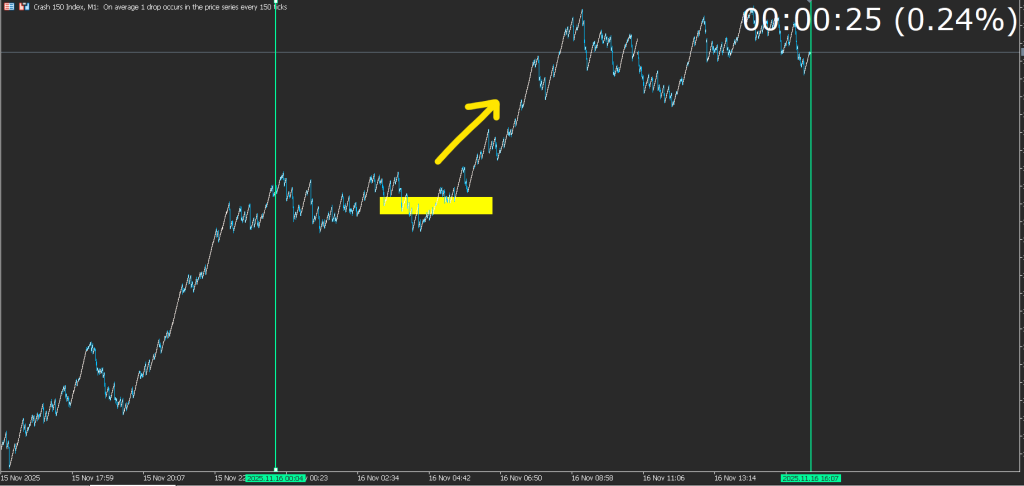
This single setup represents a repeating pattern. Great Chance moments appear across all Crash and Boom markets almost daily. Miss one, and another emerges tomorrow, next week, or next month.
The deriv crash index market operates continuously, meaning opportunities don’t vanish permanently, they cycle. Today’s missed trade becomes tomorrow’s lesson and next week’s successful execution.
Volume and liquidity remain consistently strong on these synthetic indices because they’re algorithmically maintained by Deriv itself. You’re not trading against market makers or liquidity pools, you’re trading against a mathematical model.
This creates both opportunity (consistent patterns) and risk (algorithmic adjustments that can invalidate setups without warning).
What It Means for You
If you’re actively trading or considering trading the Crash 150 Index on Deriv, here’s what you need to take away:
- Create a Deriv account if you don’t have yet. Go with this if you ready to collabarate with us to trade in the future on Deriv platform.
- Develop pattern recognition skills specific to synthetic indices, don’t rely solely on forex or stock trading techniques
- Practice spike detecting on demo accounts before risking real capital on these volatile instruments
- Establish strict risk parameters, never risk more than 1-2% of your account on any single trade
- Keep a trading journal documenting every Great Chance setup you identify, whether you trade it or not
- Monitor the market during high-activity periods (early morning GMT, Asian session, US session opens) when momentum shifts occur most frequently
Always be aware of your trades and operate with low risk.
This isn’t about chasing every spike or forcing trades when setups don’t meet your criteria. It’s about patience, discipline, and execution when genuine opportunities align.
This is not financial advice. This is simply how I analyze the crash boom index market using my own tools. Your mileage may vary, and you should never trade with money you can’t afford to lose.
The most important takeaway: Great Chance setups repeat, but they require trained eyes to spot them consistently.
Conclusion
Let’s wait until tomorrow, I’ll come back with more observations and opportunities.
The Crash 150 Index will keep moving, creating new patterns, new setups, and new learning opportunities. Your job is to stay disciplined, manage risk intelligently, and execute only when your criteria align.
Keep watching, keep learning, and trade smart.
“We always need to keep our eyes open to identify the correct spot and avoid falling for fake trends, this applies to both spike-side and trend-side movements.”
Key Facts
- Great Chance setups appear almost daily across all Crash and Boom markets on Deriv, offering consistent trading opportunities for prepared traders
- November 16th at 4:00 AM GMT +2 showed a clear bullish momentum push on Crash 150 Index despite downward pressure, a textbook high-probability setup
- Fake patterns are the biggest threat, the Crash 150 Index can simulate trend behavior before reversing violently, requiring disciplined pattern recognition to avoid traps
Frequently Asked Questions
Q: What is a “Great Chance” setup in Crash 150 trading?
A: Great Chance is our term for high-probability trading moments where technical confluence aligns, typically involving momentum divergence, compression zones, and indicator confirmation. These setups appear almost daily but require trained pattern recognition.
Q: How often does the Crash 150 Index actually crash?
A: The Crash 150 Index is designed to crash (drop sharply) on average once every 150 ticks. However, this is an average, crashes can occur more or less frequently in any given session.
Q: Can I trade Crash/Boom indices if I’m a complete beginner?
A: Yes, but start with a demo account first. These synthetic indices are extremely volatile and punish undisciplined trading. Practice spike detecting and pattern recognition before risking real capital.
Q: What’s the difference between Crash and Boom indices on Deriv?
A: Crash indices drop sharply at intervals (crashes downward), while Boom indices spike upward at intervals. They’re inverse instruments, one crashes, the other booms, offering opportunities in both directions.
Q: Is the MT5 indicator mentioned in this article available for purchase?
A: No, the indicator referenced is a private tool created specifically for personal trading analysis and is not available for sale. Traders must develop their own systems or find publicly available tools.


